Army Medical Captain
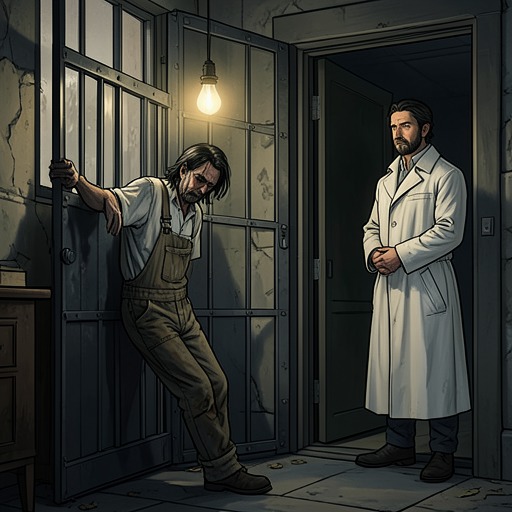
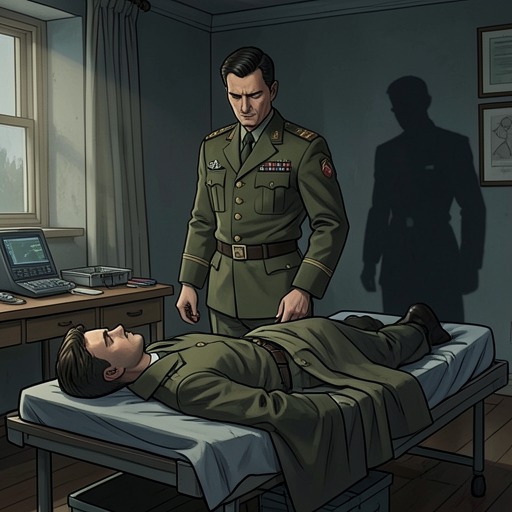
The Box ManArmy Medical Captain is the former army surgeon whose name and identity C uses to practice medicine. First C’s superior at a wartime field hospital, he later becomes C’s clinic partner, patient, and dependent. His story, reconstructed primarily through C’s affidavit, turns on a troubling convergence: C’s practical medical skill and growing independence, the captain’s serious illness and drug dependence, and an arrangement in which the captain consents to being impersonated. C ultimately identifies the corpse under investigation as Army Medical Captain, but says its cause of death is unknown.
Identity and Wartime Background
The captain served as an army surgeon and was C’s superior when C joined the medical corps as an orderly. C says he later used the captain’s name and identity in medical practice with the captain’s permission. The account distinguishes the borrowed professional identity from C’s real name, which he identifies as C; it does not supply the captain’s personal name. The borrowed identity would become central to their postwar clinic and to the legal uncertainty surrounding who was actually treating patients.
In the year before the war ended, the two men were assigned to a field hospital. The captain was absorbed in research intended to produce sugar from wood, a project prompted by wartime shortages and the value of sweets. He reasoned from goats eating paper, whose raw material was wood, and pursued the possibility that an enzyme in their intestines could break cellulose down into starch. C describes the captain as working on this problem day and night. While the captain concentrated on research, C took over about half of the hospital’s examinations and treatments. Under the captain’s guidance, C learned to perform complicated operations, an experience that later supported his claim to medical competence despite lacking a license.
Illness and Dependence
At some point during this period, the captain fell ill. C cannot establish whether the illness came from infection by bacteria associated with the goats or from tasting processed wood. He describes a high fever lasting three days, followed by recurring three-day cycles of severe cramps, spasms, and nervous disorders. The captain could not diagnose himself, and his colleagues also failed to identify the condition. C says that he continued looking for medical literature about it, without finding even a name for the illness.
C presents his response as an act of care that acquired lasting consequences. Because he felt kindly toward the captain and could not bear to watch him suffer, he began administering drugs at the captain’s persistent request. By the end of the war, the captain had developed symptoms of addiction. C remained with him, and the two were demobilized together. In retrospect, C acknowledges that supplying the drugs amounted to euthanasia over time, while also insisting that he did not have the courage to abandon a man whose suffering he had witnessed. The account thus makes care inseparable from a practice that deepened the captain’s dependence.
The Clinic and the Borrowed Identity
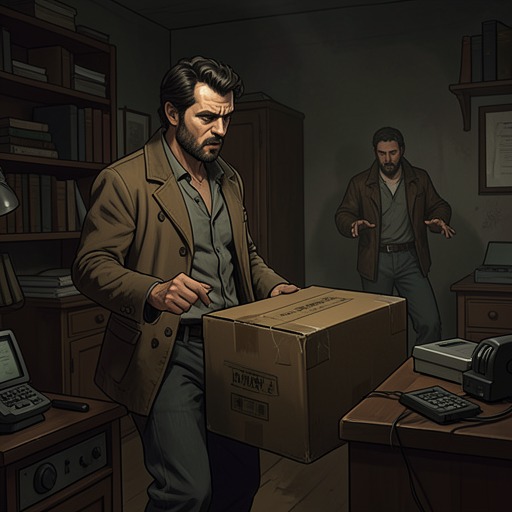
After demobilization, Army Medical Captain and C opened a clinic together. The captain continued to participate through medical charts and instructions, but, according to C, his illness left him personally unable to examine or treat patients. C performed the practical work. He says he was well regarded by patients, had never sought help from a licensed doctor, and developed particular proficiency in surgery, including appendectomies. These claims explain how the clinic could function, but they do not erase the distinction C himself draws between experience and legal authorization.
C gives several reasons for continuing to practice illegally. He says he needed to replenish the captain’s drugs and acted from friendship rather than coercion. He also acknowledges that the doctor’s qualifications secured his livelihood. Nana, the captain’s legal wife, managed the accounts; C says that his intimacy with her developed later, and that the captain had agreed to their cohabitation. He further concedes that his growing reputation and interest in medicine encouraged him to continue. Twelve years of experience and sustained study made him confident in his abilities, and he recounts finding errors in diagnoses from other hospitals. Yet his affidavit does not present competence as a legal defense: he recognizes that neither patient trust nor his assessment of other doctors made unauthorized practice permissible.
Decline, Consent, and the Corpse
C locates a turning point in the eighth year of the clinic. Until then, the captain handled outside contacts, including medical meetings. As his speech and conduct became increasingly abnormal, people began to criticize and defame him, sometimes suggesting that he was mad. The clinic also came under investigation because of its excessive use of drugs. After the two men discussed the situation, they closed the clinic and moved to another city. The move did not resolve the captain’s condition: C says that his mental state worsened, he became weary of life, and his suicidal inclination grew pronounced.
At Nana’s suggestion, the captain stopped appearing publicly, and C registered himself under the captain’s identity. C insists that the captain agreed to the plan and that, despite formal changes, their practical arrangement remained much the same. He also describes the captain as pressing him not to give up medical work, using flattery and repeated suggestions that he might kill himself if C left. This dependence persisted even as C believed the captain no longer needed him in the same way. C says he felt no bitterness toward him and argues that illness should be met with sympathy, while recognizing that the deception exposed patients to economic and physical harm.
In the affidavit’s account of the corpse, C states with certainty that the dead man is Army Medical Captain. He says the captain had been at risk of suicide for some time and regrets that he failed to stop him, but the evidence presented here does not establish the cause of death. That distinction matters: C identifies the body and acknowledges the danger, yet the circumstances remain unresolved. The captain’s final significance lies in this unresolved overlap of person and borrowed identity. His name authorizes C’s medical work, his consent helps sustain the impersonation, and his death leaves C to account for a practice that had depended on both his cooperation and his incapacity.